
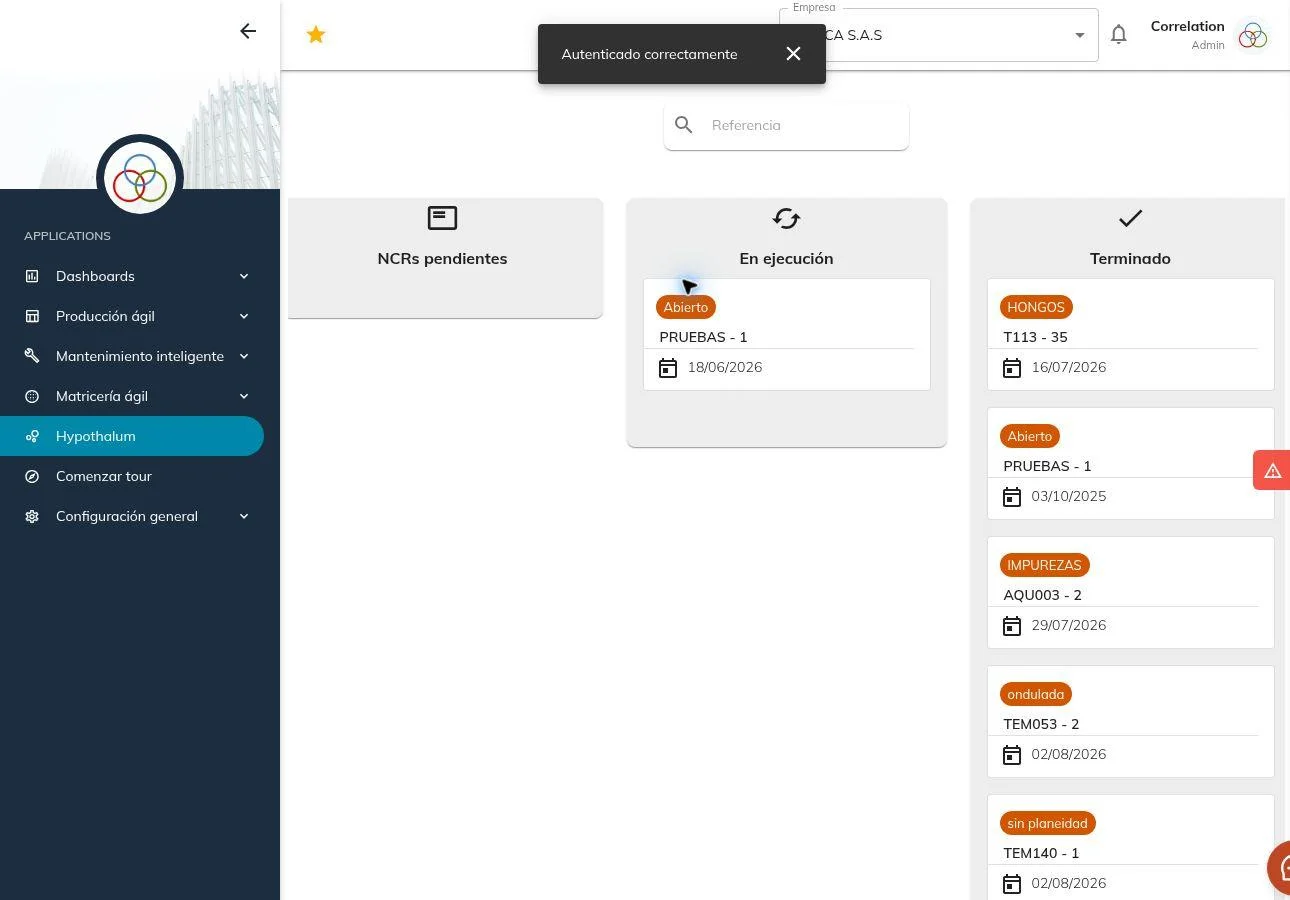
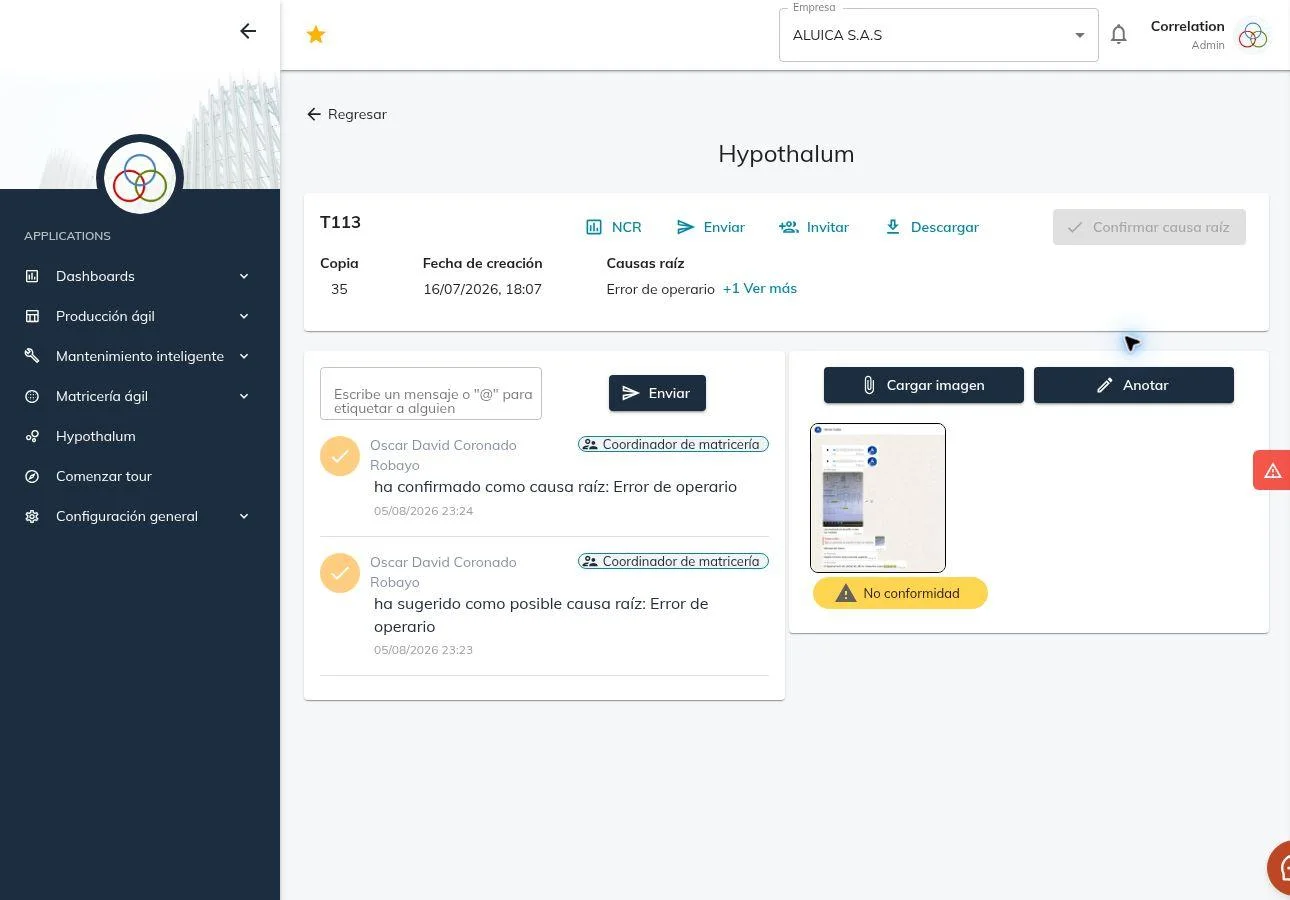
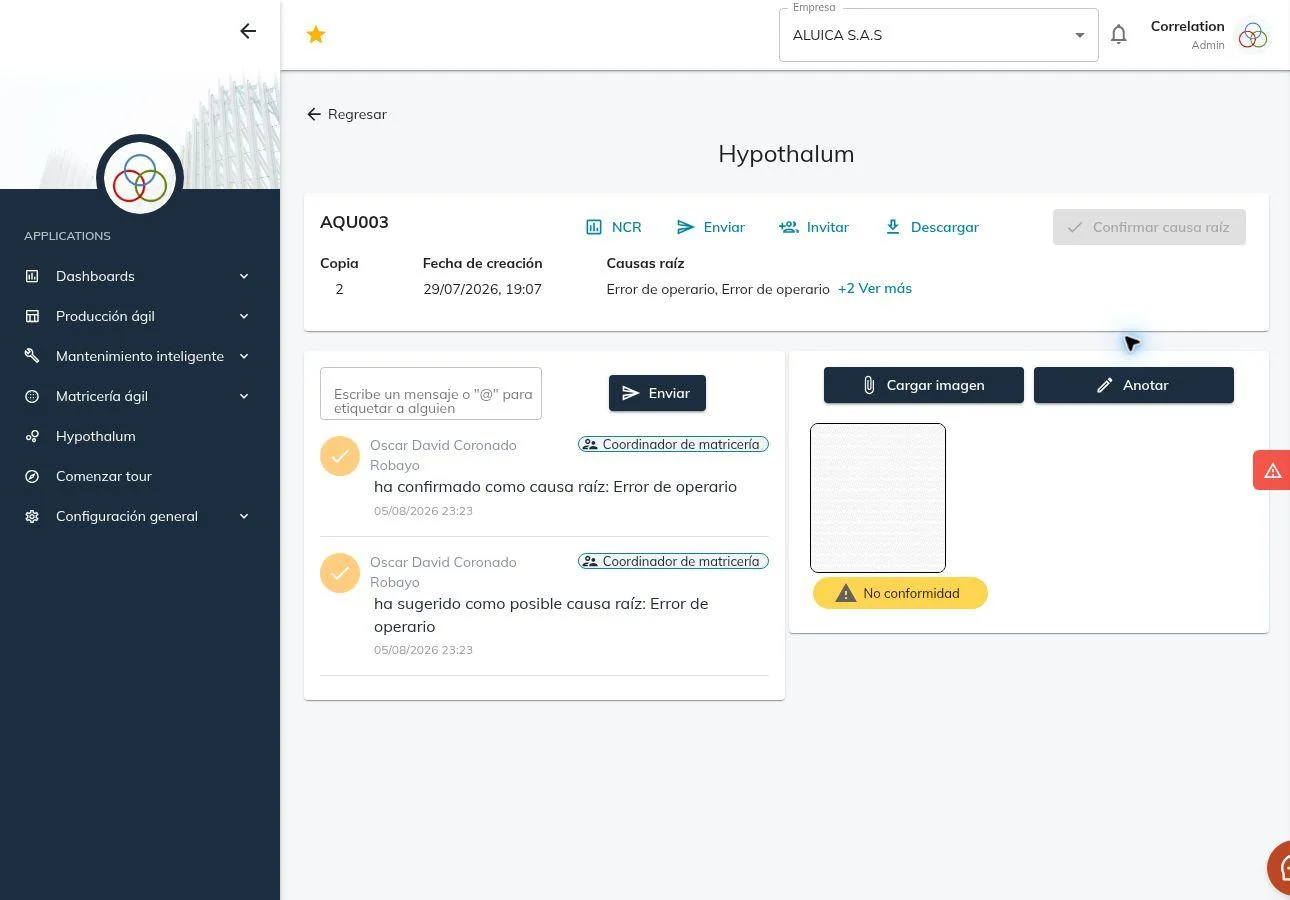
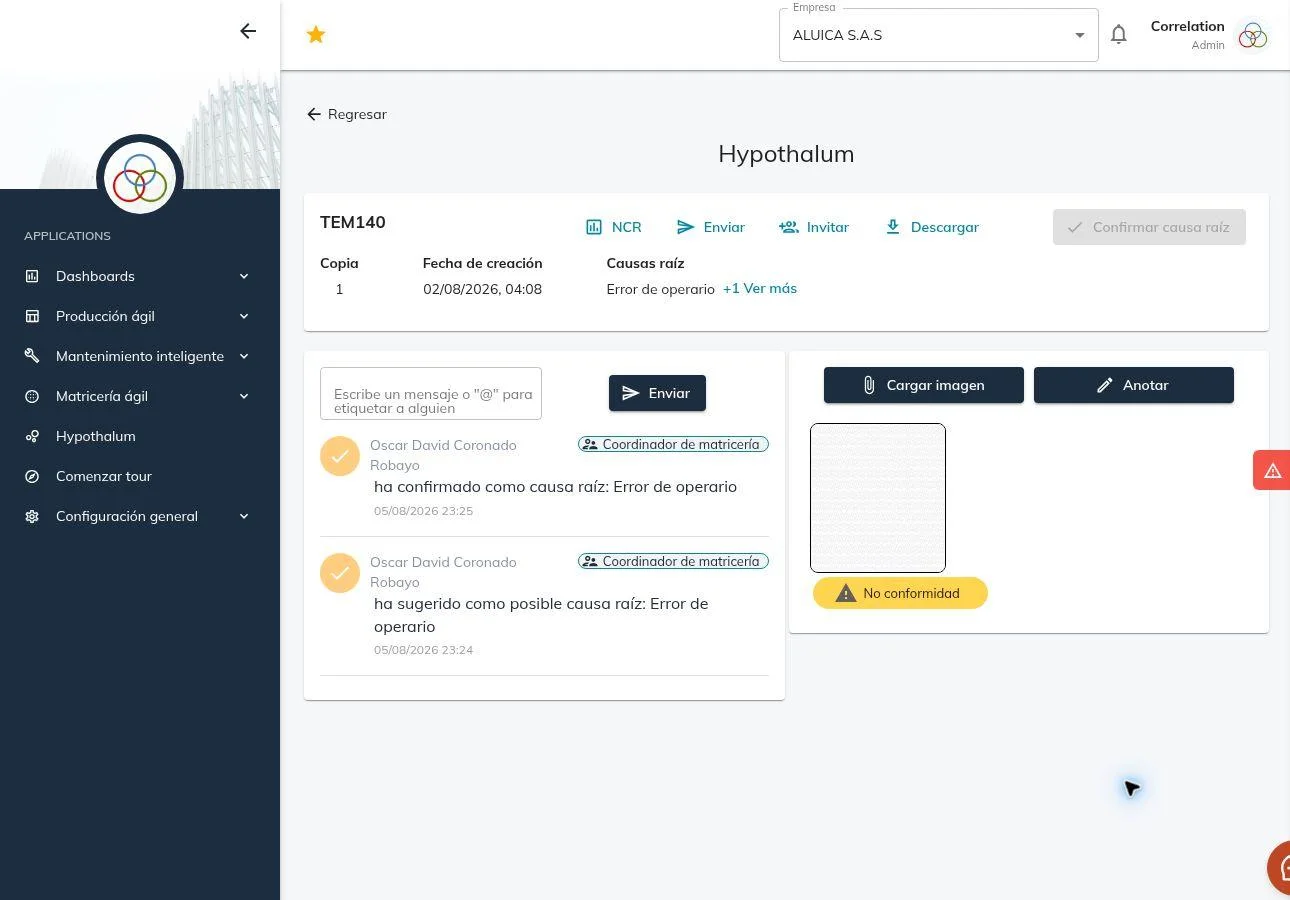
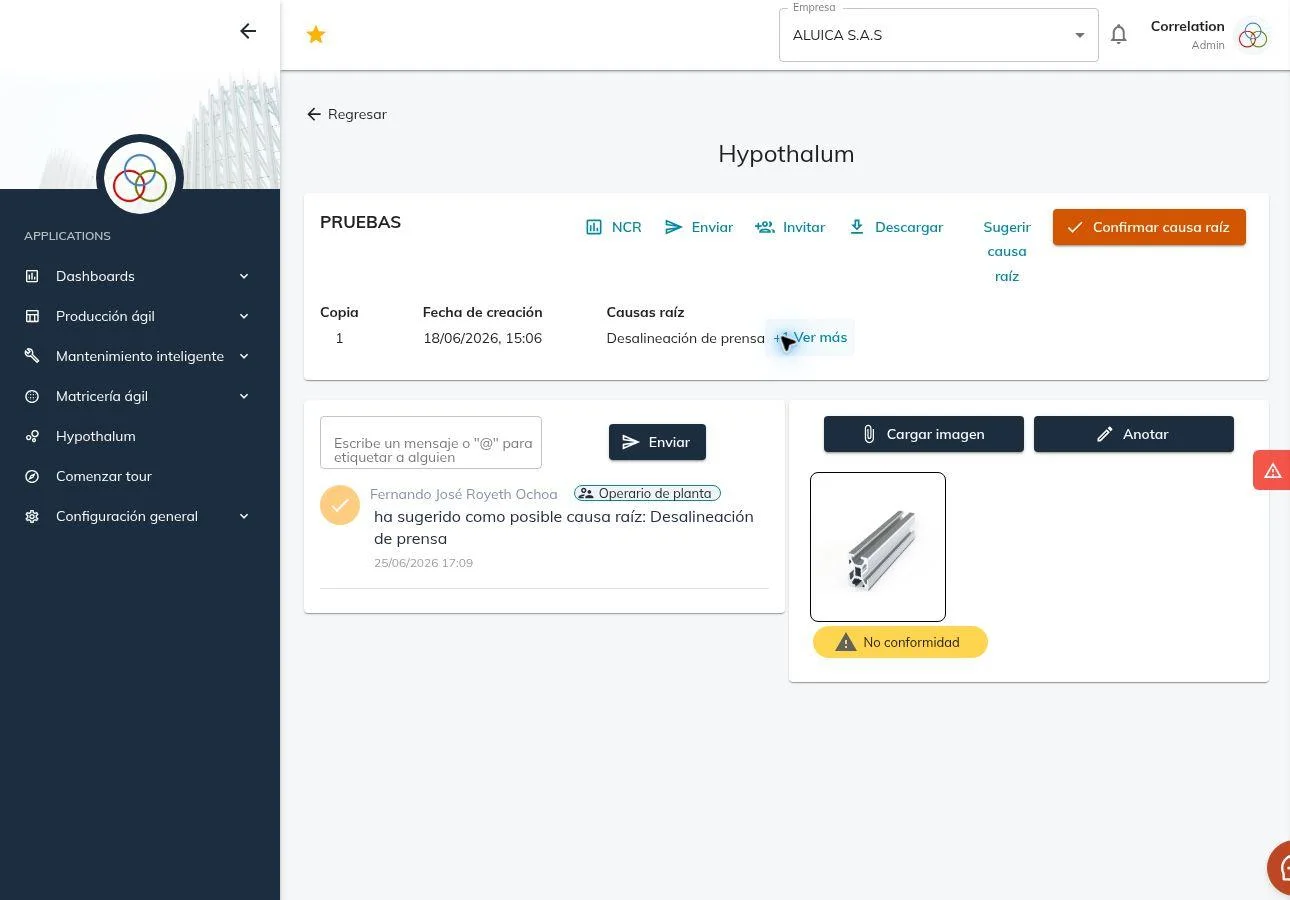
At Correlation, our continuous improvement framework is called Hypothalum.
Hypothalum provides a disciplined way for teams to move from observing a problem to understanding it, testing possible causes, implementing corrective actions, and capturing what they learn.
The principle is simple.
When something goes wrong, do not simply fix the immediate problem and move on.
- Make the problem visible.
- Develop a hypothesis about why it occurred.
- Investigate the evidence.
- Identify the root cause.
- Implement a corrective action.
- Verify whether the action actually worked.
- Capture what was learned.
This creates a repeatable continuous improvement cycle:
- Identify the failure mode.
- Make the problem visible to the relevant team.
- Develop and investigate hypotheses about the cause.
- Determine the root cause.
- Agree on corrective actions.
- Implement and verify those actions.
- Capture the learning so it can be reused.
The value of Hypothalum goes beyond problem solving.
It creates transparency and collaboration.
Instead of an issue living inside one person's notebook, inbox, or memory, the problem and the thinking behind it become visible to the organization.
Operators, die correctors, engineers, managers, and other specialists can contribute their observations and knowledge to the same investigation.
This is especially important in aluminum extrusion because problems rarely belong to a single department.
A profile defect may involve the die, billet, press conditions, handling practices, customer requirements, or several factors interacting at once.
Finding the real cause often requires knowledge from several people.
Hypothalum gives those people a common framework for working together.
It also creates accountability without relying exclusively on management supervision.
Everyone can see what happened, what is being investigated, what actions have been agreed upon, who is responsible, and whether those actions were successful.
Over time, these investigations become something more valuable than individual problem-solving records.
They become organizational memory.
Within Die Link, Hypothalum allows continuous improvement activities to be connected directly to dies, production information, engineering changes, customer issues, corrective actions, and the people involved.
A problem that might once have disappeared after it was solved instead becomes part of a growing body of structured knowledge.
The next engineer facing a similar problem does not have to start from zero.
That is the difference between repeatedly solving problems and building a continuously improving organization.
Hypothalum turns individual problems into shared learning.
Transparency makes the problem visible. Collaboration improves the investigation. Structure ensures the learning is retained.


